Mary's Role as a Model of Faith for All Believers
Welcome Back.
Updated at: 2023-08-05 13:20:18 (2 years ago by Melkisedeck Leon Shine)
πΉMary's Role as a Model of Faith for All BelieversπΉ
As a devout Christian, there is no doubt that the Virgin Mary holds a special place in my heart. She is not only the Mother of God, but also a shining example of faith for all believers. Throughout the Bible, we see countless instances where Mary's unwavering trust in God serves as a model for us to follow. Let's explore some of these points and dive deeper into the incredible role Mary plays in our spiritual lives.
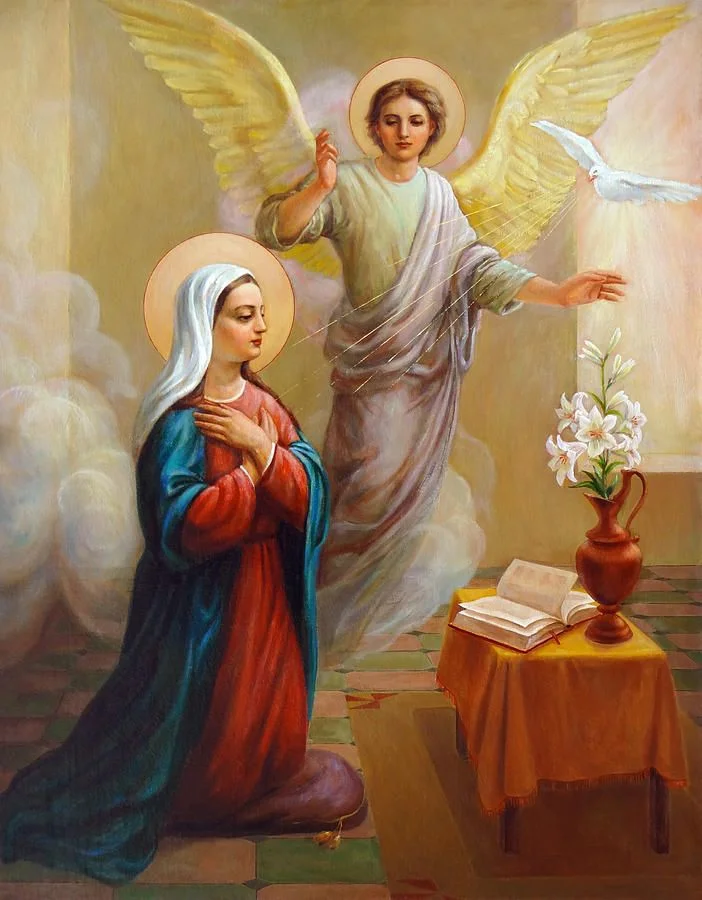
1οΈβ£ The Annunciation: One of the most iconic events in Mary's life is when the angel Gabriel appeared to her and announced that she would conceive a child by the Holy Spirit. Despite the confusion and uncertainty that must have overwhelmed her, Mary responded with complete surrender, saying, "Behold, I am the handmaid of the Lord; let it be to me according to your word" (Luke 1:38). Her resolute faith in God's plan is truly inspiring.
2οΈβ£ The Magnificat: In the Gospel of Luke, we find Mary's beautiful hymn of praise known as the Magnificat. This eloquent expression of gratitude and humility demonstrates Mary's deep spiritual understanding and trust in God's providence. Through her words, we are reminded of the importance of surrendering to God's will and magnifying His greatness in our lives.
3οΈβ£ The Wedding at Cana: At the wedding feast in Cana, Mary's role as intercessor shines brightly. When the wine ran out, she turned to Jesus and said, "They have no wine." Even though Jesus initially replied, "Woman, what does this have to do with me?" (John 2:4), Mary trusted in His power and told the servants, "Do whatever he tells you" (John 2:5). As a result, Jesus performed His first miracle, turning water into wine. Mary's unwavering faith in her Son's ability to provide is a powerful reminder for us to turn to Jesus in all our needs.
4οΈβ£ The Crucifixion: Mary's faith was tested like no other when she witnessed the crucifixion of her Son, Jesus. Despite the immense pain and sorrow she must have felt, Mary remained steadfast in her trust in God's plan. Standing at the foot of the cross, she became not only the Mother of God but also the Mother of all believers, as Jesus entrusted her to John and, by extension, to each of us (John 19:26-27). In her sorrow, Mary teaches us to find comfort and strength in the midst of our own sufferings.
5οΈβ£ The Assumption: The Assumption of Mary, dogmatically defined by the Catholic Church, affirms that at the end of her earthly life, Mary was taken body and soul into heavenly glory. This great privilege bestowed upon her by God further emphasizes her unique role as a model of faith. Just as Mary was assumed into heaven, we too aspire to follow her example and strive for eternal life with God.
The Catechism of the Catholic Church beautifully summarizes Mary's role, stating, "By her complete adherence to the Father's will, to his Son's redemptive work, and to every prompting of the Holy Spirit, the Virgin Mary is the Church's model of faith and charity" (CCC 967). Through her obedience, trust, and love for God, Mary exemplifies what it means to live a life centered on faith.
It is worth mentioning that the Catholic Church honors Mary as the Immaculate Conception, a belief that she was preserved from the stain of original sin from the moment of her conception. This unique privilege further underscores her role as a model of faith and purity.
When we reflect on Mary's life, we cannot help but be filled with admiration and gratitude for her unwavering faith. She teaches us to trust in God's plan, to surrender our lives to His will, and to intercede for others with love and compassion. Mary's example is a guiding light for all believers, reminding us of the power of faith in our spiritual journey.
So, dear friend, what are your thoughts on Mary's role as a model of faith? How has her example influenced your own spiritual life? Let us continue to seek her intercession and strive to imitate her unwavering trust in God. ππΉ
Updated at: 2023-08-05 13:19:14 (2 years ago by Melkisedeck Leon Shine)
The Intercession of the Blessed Virgin Mary π
The role of the Blessed Virgin Mary in the Catholic faith is one that holds great importance and reverence. As the Mother of God, she is seen as a powerful intercessor for all believers. πΉ
The concept of intercession refers to the act of someone praying on behalf of others. In the case of the Blessed Virgin Mary, her intercession is believed to be particularly potent due to her special relationship with Jesus. π
Throughout the Bible, we see instances of individuals seeking the intercession of Mary. One notable example is the Wedding at Cana, where Mary, noticing that the wine had run out, intercedes with Jesus on behalf of the wedding couple. Jesus, in turn, listens to his mother's request and performs his first miracle, turning water into wine. π·
This event serves as a powerful testimony to the intercessory power of the Blessed Virgin Mary. Her love and concern for others, combined with her close relationship with Jesus, allow her to bring our prayers and petitions directly to her Son. β¨
The Catechism of the Catholic Church states, "By asking Mary to pray for us, we acknowledge ourselves to be poor sinners and we address ourselves to the 'Mother of Mercy,' the All-Holy One." Mary's intercession is seen as a way to seek God's mercy and guidance in our lives. π
Catholic Saints have also written extensively about the intercession of the Blessed Virgin Mary. St. Louis de Montfort, for example, wrote in his famous book "True Devotion to Mary" about the power of Marian intercession and how it can lead us closer to Jesus. π
The rosary, a popular Catholic devotional prayer, is another way in which believers seek the intercession of Mary. By praying the Hail Mary and meditating on the mysteries of the life of Christ, Catholics believe they can draw closer to God through the intercession of the Blessed Virgin Mary. πΏ
One of the most remarkable aspects of Mary's intercession is that it extends to all aspects of our lives. Whether we are seeking guidance, healing, or simply comfort, Mary is always ready to intercede on our behalf. Her love for us as her children knows no bounds. β€οΈ
The Gospel of Luke provides further evidence of Mary's intercessory role. When the Angel Gabriel visited Mary to tell her she would bear the Son of God, he greeted her, saying, "Hail, full of grace, the Lord is with you" (Luke 1:28). This greeting acknowledges Mary's unique position as the one chosen by God to be the Mother of Jesus. π
The Catholic Church teaches that Mary's intercession is not a substitute for our direct relationship with God, but rather a way to enhance and deepen our connection to Him. It is through Mary that we can better understand and appreciate the love and mercy of our Heavenly Father. π
Another biblical example of Mary's intercession can be found at the foot of the Cross. While Jesus was dying, he entrusted his mother to the care of the Apostle John, saying, "Woman, behold, your son!" and to John, "Behold, your mother!" (John 19:26-27). In this moment, Jesus established Mary's role as the Mother of all believers, symbolizing her intercessory role in the life of the Church. π
Mary's intercession is not limited to her time on Earth but continues even in Heaven. The book of Revelation describes a vision of Mary appearing as the "woman clothed with the sun" who gives birth to a male child (Revelation 12:1-6). This image represents Mary's ongoing intercession for the Church and all believers. π
The Catholic Church teaches that Mary's intercession is so powerful that she can bring about miracles and healings. Countless testimonies and stories from believers all over the world attest to the miraculous intercession of the Blessed Virgin Mary in times of need. π
As Catholics, we are encouraged to turn to Mary in all aspects of our lives. Whether we are seeking guidance in our relationships, careers, or spiritual journeys, Mary is always there to intercede for us. Her love and compassion are boundless, and she desires nothing more than to lead us closer to her Son. πΉ
In conclusion, the intercession of the Blessed Virgin Mary is a beautiful aspect of the Catholic faith. Through her prayers and love, she brings us closer to Jesus and helps us experience His mercy and grace in our lives. May we always turn to Mary as our loving mother and seek her intercession in all our needs. π
What are your thoughts on the intercession of the Blessed Virgin Mary? Do you have any personal experiences or testimonies of her intercession in your life?
Updated at: 2025-06-22 11:01:22 (6 months ago by Melkisedeck Leon Shine)
Article Title: Mary, Mother of God and Spiritual Guide: Navigating Life's Challenges through Marian Theology
Introduction: This article explores the multifaceted role of Mary, the Mother of God, within Roman Catholic theology, focusing on her significance as a source of guidance and support in overcoming life's challenges. Key concepts such as Marian theology, intercession, and the application of various Marian devotions will be examined through the lens of established theological principles and their practical application in the lives of believers. We will analyze Mary's life as presented in scripture and tradition, highlighting her virtues and demonstrating how they can inform our own spiritual journeys.
Mary's Unique Role in Salvation History: Mary's pivotal position in Christian theology stems from her role as the Theotokos, the God-bearer (Mother of God). This title, established by the Council of Ephesus in 431 AD, underscores her unique relationship with the Trinity. Her unwavering faith and obedience to God's will, as depicted in the Annunciation narrative (Luke 1:26-38), exemplify the virtues of humility and trust central to the Christian faith. This theological understanding of Mary is not simply a matter of historical veneration; it provides a framework for understanding her ongoing role as an intercessor and spiritual guide for believers. Applying this concept practically involves contemplating Mary's example of complete surrender to God's will, inspiring believers to cultivate a similar disposition of faith and obedience in their own lives.
The Intercession of Mary: The doctrine of Mary's intercession is based on the understanding of her unique relationship with Christ. As the Mother of God, she occupies a privileged position to advocate on behalf of humanity. This is not to suggest a bypassing of Christ, but rather an acknowledgment of the power of maternal prayer. The "Communion of Saints," a key theological concept, illustrates that the faithful departed continue to participate in the life of the Church and can intercede for the living. This concept, rooted in the belief in the unity of the Body of Christ, provides a theological basis for Mary's intercession. Examples such as the wedding at Cana (John 2:1-11) illustrate her role in bringing people's needs before Jesus. Practically, this means believers can confidently approach Mary in prayer, entrusting their petitions to her maternal care, knowing that she presents them to her Son.
Navigating Adversity through Marian Devotion: Mary's life, as presented in scripture and tradition, was not without its share of suffering and hardship. Yet, her unwavering faith remained a constant source of strength. This resonates deeply with believers facing their own trials. The model of "kenosis," or self-emptying, as seen in Christ, finds a parallel in Mary's humble acceptance of God's plan, even amidst pain and uncertainty. The application of this concept involves drawing strength from Mary's example to persevere in the face of adversity, maintaining faith and trust in God's providence. The practical application of this theory involves reflecting on Mary's unwavering faith and learning to surrender to God's will in times of personal hardship.
The Rosary and other Marian Devotions: The Rosary is a powerful example of Marian devotion. Its structure, based on meditating on the mysteries of Christ's life through the lens of Mary's experience, provides a framework for contemplative prayer. This aligns with the Ignatian spiritual exercises, which emphasize using imagination and reflection to draw closer to God. The Rosary, and other devotions, are not merely rituals; they are tools that foster a deeper relationship with Mary and ultimately with Christ. In practical application, the Rosary provides a structured path to contemplation and spiritual growth, bringing believers into a deeper communion with both Christ and his mother.
Mary's Immaculate Conception and Assumption: The dogma of the Immaculate Conception (proclaimed in 1854) affirms Mary's freedom from original sin, highlighting her unique role as the vessel chosen to bear the Son of God. The Assumption (proclaimed in 1950) emphasizes her bodily ascension into heaven, signifying the victory of life over death. These dogmas are not simply historical events; they are affirmations of God's grace and the ultimate triumph of good over evil. Their practical application motivates believers to strive for holiness, inspired by Mary's purity and the hope of eternal life. These doctrines offer a profound hope and inspiration to believers, reinforcing their faith in the power of God's grace and the promise of eternal life.
Mary as Spiritual Mother and Model of Discipleship: The Catholic Church venerates Mary not only as the mother of Jesus but also as the spiritual mother of believers. This maternal role underscores the Church's nurturing and protective nature. The concept of "maternal love," in theological terms, represents God's unwavering compassion and care for humanity. Mary, as a disciple of Jesus, provides a model of faithful obedience and unwavering devotion. Following this model involves cultivating a deeper personal relationship with Jesus and emulating Mary's virtues of faith, hope, and love. The practical application of this concept encourages Christians to see Mary as a guide in their spiritual journey, seeking her example of faithful service and devotion to Christ.
Mary in Art, Literature, and Culture: Artistic and literary depictions of Mary, throughout history, have played a significant role in shaping Catholic piety and theology. These representations, from iconic paintings like those of Raphael and Michelangelo to popular hymns and liturgical music, serve as powerful tools for catechesis and devotional practice. They embody the theological concepts discussed earlier, bringing abstract theological notions to life in a way that is accessible to a broader audience. This can enhance their understanding of Marian theology and their own relationship with faith.
Conclusion and Recommendations: Mary, the Mother of God, holds a central and enduring role in Catholic theology and spiritual practice. Her life, as presented in scripture and tradition, provides a powerful example of faith, obedience, and perseverance in the face of adversity. Through Marian devotions and the contemplation of her virtues, believers can draw strength and guidance in navigating life's challenges. Further research could explore the comparative analysis of Marian theology across different Christian denominations and cultures. Understanding the historical and cultural contexts of various Marian apparitions could also provide valuable insights. The enduring influence of Mary on the lives of believers across diverse cultures and historical periods warrants further scholarly investigation. The practical application of Marian theology encourages a deeper understanding of God's love, grace, and the transformative power of faith. This understanding has the potential to positively impact individuals, communities, and the broader church.
Reader Pool: How can a deeper understanding of Marian theology, and its practical application, enrich the spiritual lives of contemporary Catholics, particularly in navigating the challenges of the 21st century?
Updated at: 2023-08-05 13:20:13 (2 years ago by Melkisedeck Leon Shine)
The Assumed Role of Mary in the Early Church
π Introduction π
In the early years of the Church, the role of Mary, the Mother of God, was not only highly regarded but also widely celebrated. As a devout Christian Roman Catholic, it brings me great joy to delve into the intriguing topic of Mary's assumed role during this significant period. Let us explore the fascinating aspects surrounding the beloved Mother of Jesus and her influence on the early Church.
1οΈβ£ Mary, the Ever-Virgin πΉ
From a Christian perspective, it is crucial to acknowledge that the doctrine of Mary's perpetual virginity is deeply rooted in the early Church. It is believed that Mary remained a virgin before, during, and after the birth of Jesus Christ. This belief is based on biblical evidence, such as the Gospel of Matthew 1:25, which states, "But he did not consummate their marriage until she gave birth to a son. And he gave him the name Jesus."
2οΈβ£ Mary, Mother of God π
One of the most significant roles Mary assumed in the early Church was that of the "Theotokos," meaning "Mother of God." This title emphasizes the belief that Mary gave birth to Jesus, who is both fully human and fully divine. This concept is supported by the Gospel of Luke 1:43, where Elizabeth proclaims, "But why am I so favored, that the mother of my Lord should come to me?"
3οΈβ£ Mary, the New Eve π
In addition to being the Mother of God, Mary is often referred to as the New Eve in early Christian theology. Just as Eve played a critical role in the fall of humanity, Mary, through her obedience and humility, played an instrumental part in the redemption of mankind. This parallel is beautifully depicted in the Catechism of the Catholic Church (494), which states, "She is 'the new Eve,' the true mother of all the living."
4οΈβ£ Mary, the Ark of the New Covenant βͺ
Another fascinating aspect of Mary's assumed role in the early Church is her association with the Ark of the Covenant. In the Old Testament, the Ark contained the tablets of the Ten Commandments, symbolizing God's presence among His people. Similarly, Mary, as the bearer of Jesus, came to be seen as the new Ark, carrying within her womb the Word of God made flesh. This connection is beautifully illustrated in the book of Revelation 11:19, where John sees "the ark of his covenant" in the heavenly sanctuary.
5οΈβ£ Mary, the Intercessor π
Mary's intercessory role in the early Church cannot be overlooked. As a loving mother, she is believed to intercede on behalf of all believers, presenting their prayers to her Son, Jesus Christ. This belief is supported by the Gospel of John 2:3-5, where Mary intercedes at the Wedding at Cana, saying, "They have no more wine." This act of intercession led to Jesus' first miracle, highlighting her powerful role.
6οΈβ£ Mary, a Model of Faith and Humility πΊ
Mary's exemplary faith and humility have served as a model for Christians throughout history. Her "yes" to God's plan of salvation, as seen in Luke 1:38, where she says, "I am the Lord's servant. May your word to me be fulfilled," teaches us the importance of surrendering to God's will with trust and obedience. Her unwavering faith encourages us to emulate her virtues in our own lives.
7οΈβ£ Mary, the Queen of Heaven π
The early Church also recognized Mary as the Queen of Heaven, acknowledging her exalted position as the Mother of God. This title finds its roots in the book of Revelation 12:1, where John sees "a woman clothed with the sun, with the moon under her feet, and a crown of twelve stars on her head." This depiction symbolizes Mary's role as the queenly mother of the Church.
8οΈβ£ Mary, A Relationship with the Saints π
Mary's close relationship with the saints in the early Church is a testament to her esteemed role. Just as we can turn to our friends and family for intercessory prayers, we can also seek the intercession of Mary and the saints, who stand before the throne of God. This understanding is beautifully expressed in the Catechism of the Catholic Church (2683), which states, "Because of their communion with the saints, the Church is inseparably linked to the heavenly liturgy."
9οΈβ£ Mary, An Inspiration to Artists π¨
Throughout the history of art, Mary has been a beloved subject of countless masterpieces. Painters, sculptors, and musicians have drawn inspiration from her beauty, grace, and purity. These artistic representations have not only captured Mary's physical appearance but also aimed to convey her spiritual significance to the early Church as the Mother of God.
π Mary, A Source of Hope and Comfort π
Mary's assumed role in the early Church also included being a source of hope and comfort for believers. Just as a mother consoles her children, Mary offers solace to those who approach her with their sorrows and joys. Her compassionate nature is reflected in her appearance to St. Juan Diego in Guadalupe, Mexico, where she shared a message of love and healing to bring peace to a troubled world.
π€ Opinion π€
As we reflect on the assumed role of Mary in the early Church, it is evident that her influence was profound and multifaceted. From her perpetual virginity to her intercessory role and her embodiment of faith and humility, Mary is a cherished figure in Christian Roman Catholic spirituality. Through her example, she continues to inspire countless believers to deepen their relationship with Jesus and strive for holiness.
What are your thoughts on Mary's assumed role in the early Church? How has her devotion impacted your spiritual journey? Let us celebrate the blessedness of the Mother of God and honor her role in our faith. πΉπβ¨
Updated at: 2023-08-05 13:19:32 (2 years ago by Melkisedeck Leon Shine)
π Mary's Assumed Role as Queen of Heaven π
When it comes to the role of the Virgin Mary, there is no denying the immense love and devotion that Catholics hold for her. At the center of this devotion is Mary's assumed role as the Queen of Heaven. But what does this title mean and why is it so significant in Christian Catholic spirituality?
1οΈβ£ According to Catholic belief, Mary's assumption into Heaven is a testament to her special place in God's plan for salvation. Just as Jesus ascended into Heaven after his resurrection, Mary, the Mother of God, was also assumed into Heaven, body and soul.
2οΈβ£ The assumption of Mary is not explicitly mentioned in the Bible, but it is deeply rooted in tradition and supported by biblical evidence. For instance, in the book of Revelation, we read about a woman crowned with twelve stars who gives birth to a male child. This woman is often interpreted as Mary, symbolizing her exalted status in Heaven.
3οΈβ£ The Catechism of the Catholic Church teaches that Mary's assumption is a "singular participation" in her Son's resurrection and an anticipation of the future resurrection of all believers. This elevates her to a unique position among the saints and confirms her role as Queen of Heaven.
4οΈβ£ Throughout the centuries, numerous Catholic saints and theologians have written about Mary's queenship. Saint John Damascene, for example, referred to her as the "Queen of all creation." Saint Louis de Montfort described her as the "Queen of saints" and the "Queen of angels."
5οΈβ£ In Catholic spirituality, Mary's queenship is seen as a reflection of her close relationship with Jesus and her role as the Mother of God. Just as a queen holds a special place of honor and authority in a kingdom, Mary holds a unique position of intercession and mediation before her Son.
6οΈβ£ In the Gospel of Luke, the angel Gabriel greeted Mary with the words, "Hail, full of grace, the Lord is with you" (Luke 1:28). This greeting emphasizes Mary's unique role in God's plan and her holiness, which further supports her title as Queen of Heaven.
7οΈβ£ Mary's assumption and queenship are also connected to her perpetual virginity. Catholics believe that Mary, being the Mother of God, remained a virgin throughout her life and did not have any other children besides Jesus. This further emphasizes her purity and exalted status.
8οΈβ£ Jesus, in his infinite wisdom, entrusted Mary as our spiritual mother while he was dying on the cross. He said to John, "Behold, your mother" (John 19:27). This demonstrates Jesus' desire for us to turn to Mary as a motherly intercessor and advocate in our spiritual journey.
9οΈβ£ The early Church Fathers, such as Saint Augustine and Saint Jerome, also recognized Mary's queenship and her role as the New Eve. Just as Eve's disobedience brought sin into the world, Mary's obedience to God's will through her "yes" at the Annunciation reversed the effects of sin and brought forth salvation.
π The devotion to the Queen of Heaven is not meant to detract from the worship and adoration due to God alone. Instead, it serves as a way for Catholics to honor Mary as the most beloved and exalted creature, while acknowledging her unique relationship with her Son.
π Ultimately, the role of Mary as the Queen of Heaven invites us to deepen our relationship with her, seeking her intercession and following her example of faith and obedience to God. She stands as a powerful advocate for all believers, guiding us on our spiritual journey towards eternal life.
What are your thoughts on Mary's assumed role as Queen of Heaven? Do you find comfort and inspiration in her intercession and motherly love? Let us know your opinion!
Updated at: 2025-06-19 15:29:00 (6 months ago by Melkisedeck Leon Shine)
Article Title: Mary as a Paradigm of Faith and Intercession: Navigating Life's Adversities
Introduction:
This article explores the multifaceted role of Mary, the mother of Jesus, within the Catholic faith, focusing on her significance as a source of spiritual guidance and strength in confronting life's challenges. We will analyze her influence through various theological lenses, examining key doctrines and their practical applications in navigating personal adversity. Key concepts to be discussed include Marian doctrines (Immaculate Conception, Assumption), the concept of intercession, and the application of relevant theological principles such as divine grace and spiritual growth. We will further examine the practical application of these concepts through the lens of various devotional practices and historical examples.
Mary's Theological Significance and the Doctrine of Intercession:
Mary's unique position as the Theotokos (God-bearer) in Christian theology establishes her pivotal role. The doctrine of the Immaculate Conception, proclaiming her conception without original sin, highlights her purity and emphasizes her suitability as the vessel for the Incarnation. This concept, rooted in the theological principle of prevenient grace, suggests a divine preparation for her role in salvation history. Her unwavering faith and obedience, exemplified in her Magnificat (Luke 1:46-55), serve as a model of humble submission to God's will. Furthermore, the Catholic understanding of Mary's intercession builds upon her maternal relationship with Jesus. This intercession is not a bypassing of Christ, but rather a manifestation of the communion of saints, a powerful theological concept illustrating the interconnectedness of believers in their journey towards God. Similar to the concept of "advocacy" in secular settings, Mary's intercession provides solace and hope, echoing the comforting presence of a compassionate mother.
Mary as a Guide Through Adversity: Practical Application of Marian Devotion:
Mary's life, depicted in scripture and tradition, is replete with trials and tribulations. Her perseverance despite the uncertainties surrounding Jesus' birth and her unwavering support during his ministry and crucifixion serve as inspirational examples. Applying a cognitive-behavioral therapy framework, we see Mary modeling adaptive coping mechanisms in the face of significant stressors. Her unwavering faith serves as a paradigm of resilience. Devotional practices like the Rosary, a form of contemplative prayer focusing on the mysteries of Christβs life, offer a structured approach to cultivating this resilience. The act of reciting the prayers and contemplating the events enhances mindfulness, promotes emotional regulation, and strengthens faith, drawing upon the principles of spiritual formation and the cultivation of virtuous habits.
Mary's Role in Apparitions and Messages: Examining Claims of Divine Revelation:
Numerous reported Marian apparitions throughout history, such as at Guadalupe and Fatima, have profoundly impacted faith and offered messages of repentance, hope, and conversion. While the Church evaluates such events rigorously, their enduring influence underscores the significance of Mary's perceived maternal presence. From a sociological perspective, these apparitions may be understood as expressions of collective hope and a desire for divine guidance during periods of societal upheaval, providing comfort and a sense of unity in times of crisis. The messages frequently emphasize prayer, penance, and devotion, reflecting a call for personal spiritual transformation.
Mary as Spiritual Mother and Her Representation in Art and Culture:
The concept of Mary as spiritual mother extends beyond her biological role. Jesus' entrusting her to John (John 19:27) signifies her role as a spiritual guide for all believers. This maternal role is underscored by social learning theory, where Mary acts as a role model and facilitates spiritual growth in her followers. The widespread representation of Mary in art and various devotional practices across different cultures, further highlights her importance. These artistic and cultural expressions serve as visual and emotional anchors for faith, enriching the spiritual experiences of believers and deepening their connection with Mary and the divine.
Conclusion and Recommendations:
Mary's role in Catholic theology is multifaceted and deeply significant. Her life, teachings, and reported apparitions provide a rich source of spiritual guidance, particularly in navigating life's difficulties. The principles of faith, resilience, and devotion, as exemplified by her life, can be effectively applied using various methods, including contemplative prayer, community engagement, and charitable works. Further research could explore the comparative effectiveness of Marian devotional practices on psychological well-being and their impact on social cohesion. Analyzing the psychological mechanisms underlying the perceived efficacy of Marian intercession could also provide valuable insights into the role of faith in coping with adversity. The enduring appeal of Marian devotion highlights the enduring human need for spiritual solace and maternal guidance. Understanding the theological framework and psychological implications of this devotion offers a pathway to further explore the intersection of faith and human experience.
Reader Pool:
Considering the multifaceted aspects of Maryβs role discussed in this article, how might a deeper understanding of Marian theology inform the development of effective pastoral care strategies?
Updated at: 2023-08-05 13:19:51 (2 years ago by Melkisedeck Leon Shine)
πΉ The Rosary: Unlocking the Mysteries of Christ with Mary πΉ
Introduction: The Rosary is a powerful prayer that allows us to delve deep into the mysteries of Christ's life, death, and resurrection, all while seeking the intercession and guidance of the Blessed Virgin Mary. πΏβ¨
The Power of the Rosary: Through the repetition of Hail Marys and the meditation on the mysteries, the Rosary becomes a spiritual journey where we can encounter the presence of Christ and experience the loving embrace of His mother, Mary. ππ
Mary's Role in our Spiritual Lives: As Catholics, we believe that Mary holds a special place in the divine plan of salvation. Just as she played a pivotal role in the Incarnation, Mary continues to lead us closer to her Son, Jesus. πΉποΈ
The Joyful Mysteries: The first set of mysteries invites us to reflect on the joyful moments in the life of Christ and His mother. We meditate on the Annunciation, the Visitation, the Nativity, the Presentation, and the Finding of Jesus in the Temple. These mysteries remind us of God's infinite love and the joy found in surrendering our lives to Him. ππΌ
The Sorrowful Mysteries: In the second set of mysteries, we contemplate the painful moments leading up to Jesus' crucifixion. Through the Agony in the Garden, the Scourging at the Pillar, the Crowning with Thorns, the Carrying of the Cross, and the Crucifixion, we are reminded of Christ's sacrifice for our salvation. Mary's presence during these moments offers solace and strength. ππ
The Glorious Mysteries: The third set of mysteries brings us to the triumphant resurrection of Jesus and the glorious moments that followed. Meditating on the Resurrection, the Ascension, the Descent of the Holy Spirit, the Assumption of Mary, and the Coronation of Mary, we find hope in the promise of eternal life and the intercessory role of Mary as Queen of Heaven. β¨π
The Luminous Mysteries: Introduced by Saint John Paul II, the Luminous Mysteries shed light on the public ministry of Jesus. They invite us to reflect on His Baptism in the Jordan, the Wedding at Cana, the Proclamation of the Kingdom, the Transfiguration, and the Institution of the Eucharist. These mysteries deepen our understanding of Christ's mission and His presence in the sacraments. π¦π·
The Power of Mary's Intercession: Mary is not only our spiritual mother but also a powerful intercessor before God. Just as she interceded at the Wedding at Cana, she continues to listen to our prayers and present them to her Son. Through the Rosary, we can seek her assistance in our spiritual journey, knowing that she desires nothing more than to lead us closer to Christ. πΉπ
Biblical Examples of Mary's Importance: In Luke 1:28, the angel Gabriel greets Mary with the words, "Hail, full of grace, the Lord is with you." This shows that Mary was chosen by God for a special role in salvation history. Jesus also honored her at the wedding in Cana, where He performed His first miracle at her request (John 2:1-11). These examples affirm Mary's significant role in our faith. ππ
The Catechism and Mary's Perpetual Virginity: The Catechism of the Catholic Church teaches that Mary remained a virgin before, during, and after the birth of Jesus (CCC 499-507). This belief reflects the reverence and honor we hold for Mary as the Mother of God and her lifelong commitment to purity and fidelity. πΉπ
The Witness of Catholic Saints: Throughout history, many Catholic saints have expressed a deep love and devotion to Mary. Saint Louis de Montfort, for example, wrote extensively about the power and importance of the Rosary in his book "The Secret of the Rosary." Saint Teresa of Calcutta, also known as Mother Teresa, once said, "The Rosary is a powerful weapon to put the devil to flight." These saints recognized the spiritual significance of the Rosary and Mary's intercession. πΏβοΈ
The Importance of Praying the Rosary: Praying the Rosary helps us to enter into a deeper relationship with Christ and to meditate on the mysteries of His life. It allows us to seek Mary's guidance and intercession, knowing that she is a loving and compassionate mother. The Rosary brings us closer to the heart of Jesus and helps us to unlock the mysteries of our faith. πΉπ
The Transformative Power of the Rosary: By regularly praying the Rosary, we open ourselves to the transforming power of God's grace. Mary, our gentle guide, leads us on a spiritual journey where we can discover a deeper understanding of Jesus' life, death, and resurrection. Through this prayer, we become more attentive to God's presence in our lives and are inspired to live out our faith with joy and love. πβ¨
Conclusion: The Rosary is a beautiful and profound prayer that invites us to unlock the mysteries of Christ alongside His mother, Mary. It is a pathway to encounter the love of God and to deepen our relationship with Jesus. Let us embrace this powerful tool of prayer and seek Mary's intercession as we journey closer to Christ. πΉπ
Do you find solace in the Rosary? Share your thoughts and experiences in the comments below! πΏπ
Updated at: 2023-08-05 13:19:28 (2 years ago by Melkisedeck Leon Shine)
Understanding the Doctrine of Mary as Co-Redemptrix
π Introduction: The Doctrine of Mary as Co-Redemptrix is a belief held by many Roman Catholics that recognizes the unique role of the Virgin Mary in the redemption of humanity alongside Jesus Christ, her divine Son. It is a beautiful and profound teaching that deserves our attention and understanding.
π Mary, the Mother of God: As Catholics, we believe that Mary, the blessed Virgin, was chosen by God to be the mother of Jesus Christ. The Bible tells us that she conceived through the power of the Holy Spirit and gave birth to the Son of God, without losing her virginity. This miraculous event highlights the unique and special role she played in salvation history.
π Biblical Examples: Throughout the Bible, we find instances that point to Mary's significance as the co-redeemer. In the book of Genesis, God promises that the "woman" will crush the head of the serpent, foreshadowing Mary's role in defeating sin and evil through her obedience to God's plan. Additionally, at the wedding at Cana, Mary intercedes for the couple and prompts Jesus to perform his first miracle, symbolizing her intercessory power.
ποΈ Mary's Fiat: One of the most powerful moments in Mary's life is her response to the angel Gabriel when she accepts God's will, saying, "Behold, I am the handmaid of the Lord; let it be to me according to your word" (Luke 1:38). This humble and obedient "yes" opened the door for our salvation and demonstrated Mary's cooperation in the divine plan of redemption.
π Co-Redemptrix and Mediatrix: The title "Co-Redemptrix" does not imply that Mary shares in the divine nature of redemption, but rather recognizes her unique cooperation in the redemptive work of Christ. It signifies her intimate participation in the sufferings of her Son, particularly at the foot of the cross. In a similar vein, the title "Mediatrix" acknowledges Mary as the channel through which all graces flow to humanity.
πΉ Mary as the New Eve: Just as the first Eve played a significant role in the fall of humanity, Mary, the new Eve, played a crucial role in our redemption. She is often referred to as the "New Eve" because her obedience to God's will reversed the disobedience of the first woman, thus opening the way for our salvation. This connection further highlights her role as a co-redeemer.
π Catechism of the Catholic Church: The Catechism states, "Mary's cooperation in the work of redemption is made manifest from the time of the virginal conception of her Son to his death" (CCC 968). This official teaching of the Church emphasizes Mary's indispensable role in the salvation of mankind.
π Saints and Church Fathers: Many saints and Church Fathers have recognized and written about Mary's role as Co-Redemptrix. St. Alphonsus Liguori, a Doctor of the Church, wrote extensively on this topic, highlighting Mary's sufferings and her united offering with Jesus on the cross. Similarly, St. John Paul II referred to Mary as the "Co-Redemptrix" on multiple occasions.
π Bible Evidence: In John's Gospel, Jesus entrusts the care of his beloved disciple to Mary, saying, "Woman, behold, your son!" And to the disciple, "Behold, your mother!" (John 19:26-27). This moment signifies that Mary is not only the mother of Jesus but also the mother of all believers, emphasizing her role in our spiritual journey.
πΉ Mary's Compassion: Mary's compassion for humanity was evident throughout her life, but it shone most brightly at the foot of the cross. As she witnessed the agony and suffering of her Son, she endured immense pain herself. Mary's heart was united with Jesus in his redemptive sacrifice, making her a true co-redeemer.
π Biblical Connection: The book of Revelation describes a woman who gives birth to a child who will rule all nations with a rod of iron (Revelation 12:5). Many theologians interpret this passage as referring to Mary and Jesus. This connection further supports the belief in Mary's role as Co-Redemptrix.
βͺ Marian Devotion: Understanding the Doctrine of Mary as Co-Redemptrix should not overshadow our devotion to Jesus Christ. Instead, it should enhance our understanding of the role Mary played in our salvation and deepen our appreciation for her as our loving Mother.
π Intercessory Power: As Co-Redemptrix, Mary has a special intercessory power before her Son. Just as she interceded at the wedding at Cana, she continues to intercede for us today, presenting our prayers and needs to Jesus, who is always attentive to his mother's requests.
π Conclusion: The Doctrine of Mary as Co-Redemptrix is a rich and beautiful teaching that illuminates Mary's role in our salvation. By understanding and embracing this doctrine, we grow in our love and appreciation for the Mother of God, who lovingly cooperated with God's plan for our redemption.
π What are your thoughts on the Doctrine of Mary as Co-Redemptrix? Do you find it a meaningful and significant aspect of your faith? Share your perspectives and experiences in the comments below.
Updated at: 2023-08-05 13:20:32 (2 years ago by Melkisedeck Leon Shine)
The Assumed Role of Mary as Our Heavenly Advocate π
Introduction πΉ As devoted Christians, we hold a special place in our hearts for the Blessed Virgin Mary, the Mother of God. Throughout history, Mary has been revered as a powerful intercessor and advocate for believers, and her assumed role as our Heavenly Advocate is a source of great comfort and inspiration for many.
Mary as the Mother of Jesus π Mary's unique role as the Mother of Jesus sets her apart from any other human being. The Bible clearly states that Mary was a virgin when she conceived Jesus through the power of the Holy Spirit (Luke 1:26-38). As Catholics, we believe that Mary's perpetual virginity is a testament to her holiness and her sacred role in God's plan of salvation.
The Assumption of Mary into Heaven π One of the most beautiful aspects of our faith is the belief in the Assumption of Mary into Heaven. This doctrine, which was declared by Pope Pius XII in 1950, teaches that Mary was taken body and soul into Heaven after her earthly life. It is a sign of her special favor with God and her role as the Queen of Heaven.
Mary's Intercession in the Wedding at Cana π§ One biblical example of Mary's intercessory role is found in the Wedding at Cana (John 2:1-11). When Mary realized that the hosts had run out of wine, she turned to Jesus and said, "They have no wine." Mary's simple plea led Jesus to perform his first miracle, turning water into wine. This event demonstrates Mary's powerful intercession on behalf of humanity.
The Rosary and the Hail Mary πΏ The practice of praying the Rosary is an integral part of our Catholic devotion to Mary. Each time we recite the Hail Mary, we are calling upon Mary to intercede for us. The words of this prayer are taken directly from the Bible, with the angel's greeting to Mary (Luke 1:28) and Elizabeth's words of praise (Luke 1:42) forming the core of the prayer. Through the Rosary, we entrust our intentions to Mary, our Heavenly Advocate.
The Catechism of the Catholic Church on Mary's Role π According to the Catechism of the Catholic Church (CCC 969), "This motherhood of Mary in the order of grace continues uninterruptedly from the consent which she loyally gave at the Annunciation and which she sustained without wavering beneath the cross." Mary's role as our Heavenly Advocate is closely linked to her motherhood in the spiritual order, as she continues to care for and intercede on behalf of all believers.
The Mediation of Mary and the Saints βͺοΈ While Mary holds a special place as our Heavenly Advocate, it is important to note that our devotion to her does not diminish our devotion to Jesus Christ. Mary's role as an intercessor does not mean that we bypass Jesus or worship her as a deity. Instead, we recognize her as a powerful mediator who points us always to her Son, leading us closer to Jesus through her prayers and example.
The Example of St. Maximilian Kolbe π The life of St. Maximilian Kolbe, a Polish Franciscan friar, serves as a beautiful example of Mary's role as our Heavenly Advocate. In the midst of the horrors of Auschwitz concentration camp during World War II, Kolbe selflessly volunteered to take the place of a fellow prisoner who was chosen to die. Throughout his imprisonment, Kolbe found solace and strength in his devotion to Mary, entrusting himself entirely to her care and intercession.
Mary's Fiat and Our Response π©βπ§βπ¦ Mary's humble response to the angel Gabriel's announcement at the Annunciation is a model for us all. She said, "Behold, I am the handmaid of the Lord; let it be to me according to your word" (Luke 1:38). Just as Mary willingly embraced God's plan for her life, we too are called to respond wholeheartedly to God's will. Through Mary's intercession, we can find the courage and grace to say "yes" to God's plan for us.
The Importance of Seeking Mary's Intercession π Mary's role as our Heavenly Advocate is a gift from God to His Church. When we seek her intercession, we are acknowledging our need for help and guidance in our spiritual journey. Just as a child turns to their mother for comfort and support, we can turn to Mary with confidence, knowing that she will always lead us closer to her Son, Jesus Christ.
The Glorious Assumption of Mary πΉ The Assumption of Mary into Heaven reminds us of the hope we have as believers. Mary's assumption signifies the fulfillment of God's promises and the victory of life over death. By her example, Mary shows us that through faith and obedience to God, we too can hope for the resurrection of our bodies and eternal life in Heaven.
Mary, Our Heavenly Advocate, and the Saints βοΈ In the Communion of Saints, we find a beautiful network of intercession. Just as we ask our fellow brothers and sisters in Christ to pray for us, we can also ask Mary and the saints to intercede on our behalf. Mary, as our Heavenly Advocate, stands at the forefront of this communion, leading us towards deeper union with God and drawing us closer to the saints who have gone before us.
The Words of St. Louis de Montfort π St. Louis de Montfort, a French priest and theologian, wrote extensively about Mary's role as our Heavenly Advocate. He said, "When the Holy Spirit, her spouse, finds Mary in a soul, He hastens there and enters fully into it. He gives Himself generously to that soul according to the place it has given to His spouse." Through our devotion to Mary, we invite the Holy Spirit to work powerfully within us.
Your Thoughts and Opinions? π As we reflect upon the assumed role of Mary as our Heavenly Advocate, it is important to consider our own beliefs and experiences. How has your devotion to Mary impacted your spiritual journey? Do you find comfort in seeking her intercession? Share your thoughts and opinions, and let us continue to grow in our love and understanding of the Blessed Virgin Mary.
Conclusion π In the Catholic faith, we cherish Mary as our Heavenly Advocate, recognizing her unique role in God's plan of salvation. Through her intercession, we find comfort, guidance, and inspiration on our spiritual journey. As we continue to deepen our devotion to Mary, let us draw closer to her Son, Jesus Christ, and strive to emulate her faith and obedience. May Mary, our Heavenly Advocate, continue to lead us always to the heart of God. Amen. ππΉ
Updated at: 2025-06-05 10:20:04 (7 months ago by Melkisedeck Leon Shine)
This essay explores the theological concept of Mary's divine motherhood, a central tenet of Catholic faith. We will analyze its scriptural basis, its implications for ecclesiology (the study of the Church), and its ongoing relevance for contemporary spiritual life. Key concepts include the Immaculate Conception (Mary's conception without original sin), Theotokos (God-bearer, a title for Mary), and Mariology (the study of Mary's role in salvation history).
1. Scriptural Foundation and the Annunciation: The Gospel accounts of the Annunciation (Luke 1:26-38) and the Nativity (Luke 2:1-7) provide the scriptural foundation for understanding Mary's role. Luke's narrative emphasizes Gabriel's announcement to Mary of her divinely ordained motherhood. Applying the theological principle of divine election, we see Mary chosen, not because of any inherent merit, but purely through God's grace. This election is a pivotal moment in salvation history, prefiguring the Incarnation itself. The angelβs words establish Mary's unique status: "You will conceive and give birth to a son, and you are to call him Jesus. He will be great and will be called the Son of the Most High." This declaration directly establishes the core of the Marian dogma.
2. Mary as Theotokos and the Council of Ephesus: The title Theotokos ("God-bearer"), affirmed at the Council of Ephesus (431 AD), solidifies the understanding of Mary's role in the Incarnation. This council definitively established the orthodox Christological position, affirming the full divinity and humanity of Jesus Christ. Mary's role as Theotokos is not merely metaphorical; it signifies her active participation in the divine plan of salvation. This concept is rooted in the hypostatic union, the theological principle that the divine and human natures are united in the single person of Christ. Mary's motherhood, therefore, is not just a human event; itβs intrinsically connected to the central mystery of the Christian faith.
3. Marian Intercession and the Cana Wedding: The event at the wedding feast at Cana (John 2:1-11) exemplifies Mary's intercessory role. Her instruction to the servants, "Do whatever he tells you," demonstrates her unwavering trust in Jesus' authority and her concern for others' needs. This showcases the model of Marian intercessionβnot a bypassing of Christ's mediation but a collaboration within the salvific economy. This aligns with the concept of mediatrix, often associated with Mary, understanding it not as a rival to Christ's unique mediation, but as a participant in the same economy of salvation.
4. Mary's Perpetual Virginity: The belief in Mary's perpetual virginity, while not explicitly detailed in scripture, is a deeply held belief within Catholic tradition. The Gospel of Matthew (Matthew 1:25) indicates that Joseph did not consummate the marriage until after the birth of Jesus. This, combined with theological interpretations, reinforces the doctrine of perpetual virginity, viewing it as a symbol of Mary's complete consecration to God and her unique role in salvation history. This perspective is understood within the framework of theological anthropology, emphasizing the unique and sacred character of Mary's person.
5. Mary's Role in Ecclesiology: The Second Vatican Council's Lumen Gentium significantly addressed Mary's role in the Church. Mary is presented as a model of faith and obedience, a spiritual mother to the Church, and an intercessor. Her role, however, is always understood in its essential relationship with Christ. Mary's motherhood is seen as an instrument within Godβs plan of salvation, not as an independent or competing force. This highlights the importance of maintaining the correct balance between Christocentrism and the veneration of Mary.
6. Mary as a Model for Christian Life: Mary's life, characterized by faith, obedience, and humility, serves as an example for all Christians. Her unwavering trust in God's plan, even in the face of significant challenges, presents a powerful example of faithful discipleship. This embodies the theological concept of Imitatio Christi (the imitation of Christ), showing that Maryβs life provides a path towards a deeper relationship with Christ.
7. Contemporary Relevance and Ongoing Devotion: Devotion to Mary continues to be a significant aspect of Catholic life. The belief in her maternal care and intercession provides comfort and hope for many. However, this devotion must always remain rooted in Christocentric theology. The importance of fostering correct Marian piety, avoiding any potential imbalances, is central to ensuring the faithful maintain a proper understanding of Maryβs role in the divine economy.
Conclusions and Recommendations: The Marian dogma, rooted in scripture and solidified by theological reflection, presents a complex and multifaceted understanding of Mary's role in salvation history. Her divine motherhood is intrinsically linked to the Incarnation and Christ's redemptive work. A proper understanding of this dogma requires a deep appreciation for its scriptural basis, its articulation within the councils of the Church, and its ongoing relevance for Christian life. Further research could explore the diverse theological perspectives on Marian doctrines, analyzing their historical development and their contemporary implications for ecumenical dialogue. Moreover, exploring the cultural and sociological aspects of Marian devotion across different regions and communities could provide a more comprehensive understanding of the richness and complexities of this tradition. The emphasis should always remain on the Christocentric nature of faith, with Marian devotion understood as a path that leads to a deeper relationship with Jesus Christ. Maintaining this focus will help to prevent any potential misinterpretations or imbalances within the theological framework.
Reader Pool: How might a more nuanced understanding of the Marian dogma contribute to a more fruitful interfaith dialogue, particularly in addressing potential theological differences?